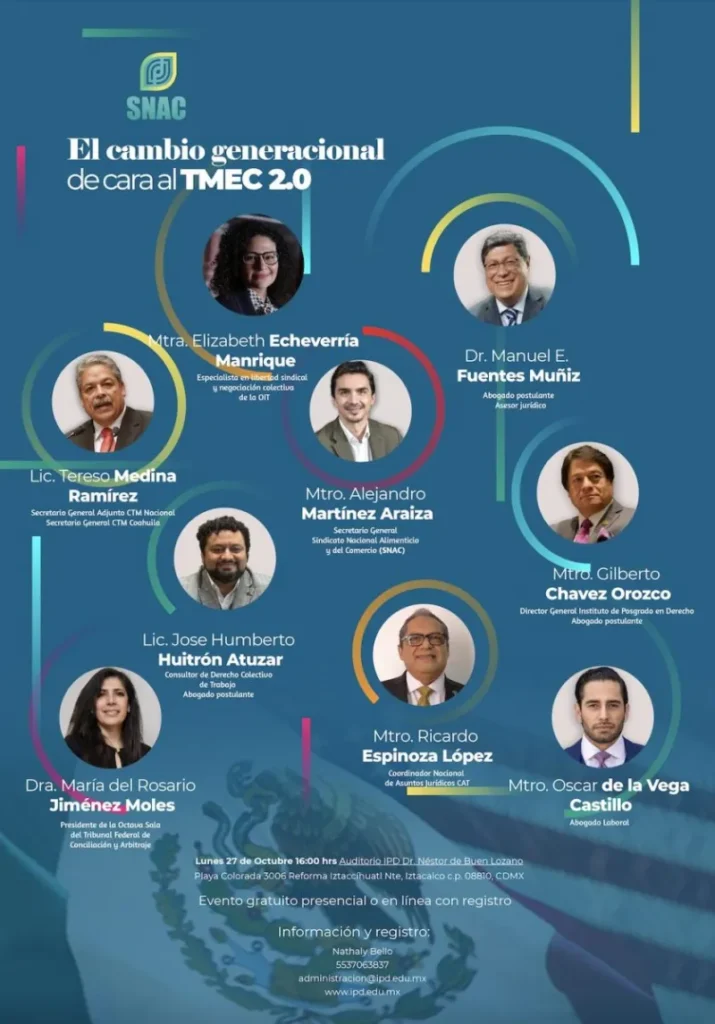
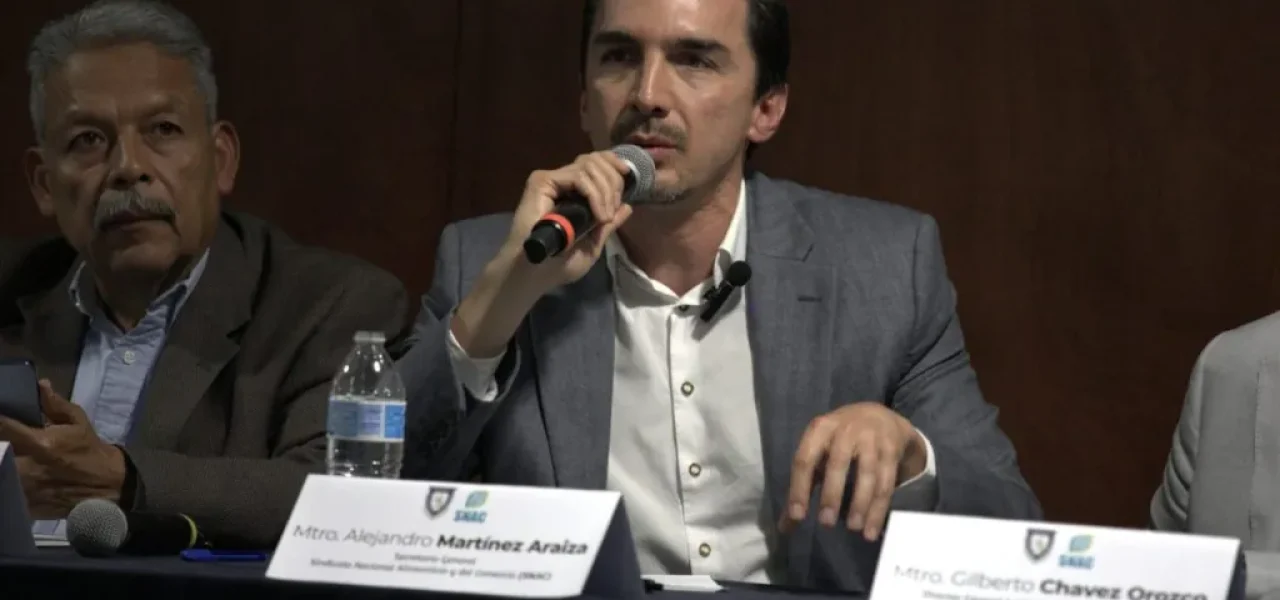
Alejandro Martínez Araiza, Secretary General of the National Food and Commerce Union (SNAC), joined the voices of prominent figures of unionism and the labor arena in Mexico to define an intergenerational stance in regard to the review of the United States-Mexico-Canada Agreement (USMCA) to take place soon.
In a meeting at the Graduate Institute of Law (IPD), the young leader contrasted his perspective on the provisions in labor matters that the treaty should include in its new version, particularly including sections that address the integration of Artificial Intelligence (AI) and new technologies.
To that end, the union leader laid out a scenario in which, in 10 years, AI will very likely be fully integrated into working life, and even beyond, he said, we may be talking not about the law on human workers but about that of machines.
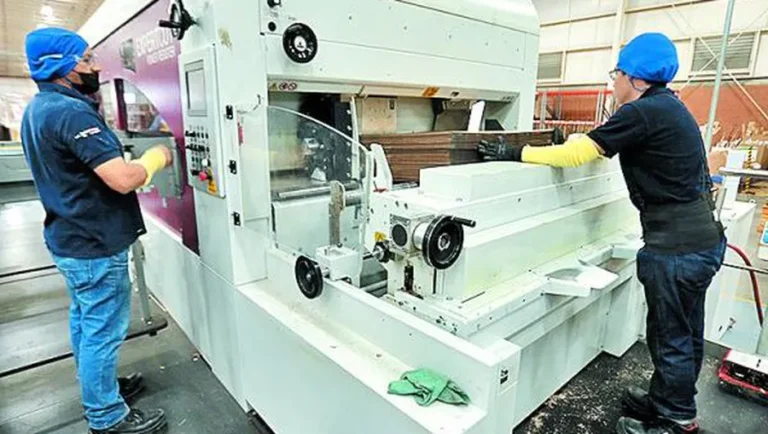
Therefore, Alejandro Martínez Araiza emphasized the need of acknowledging the importance of a regional regulation in labor matters in regard to technology and how it is to be incorporated into work centers.
https://www.facebook.com/SindicatoNacionalAlimenticioYDelComercio/posts/1274855711340825
Alejandro Martinez Araiza and his vision in regard to the USMCA.
As part of his participation in the panel on “The Generational Change in Face of the USMCA 2.0”, the Secretary General of the SNAC shared the list of proposals they presented to contribute to the reconfiguration of the regional treaty, particularly in regard to new technologies, automatization and AI
In regard to them, he mentioned the right to job security, training, and professional retraining in face of automatization; union participation in technological adoption and the creation of Joint Committees by sector; a technology tax and a labor justice fund to provide support to those that lose their jobs due to the introduction of new technologies.
The leader also provided information in regard to the proposals for data protection and dignity in labor, the prohibition of unilateral decisions and the creation of “superintelligence” that substitutes human labor; the creation of a National Authority on Technological Ethics and a Trilateral Observatory on AI and Work; and the guarantee of digital union freedom and full rights for remote or platform workers.